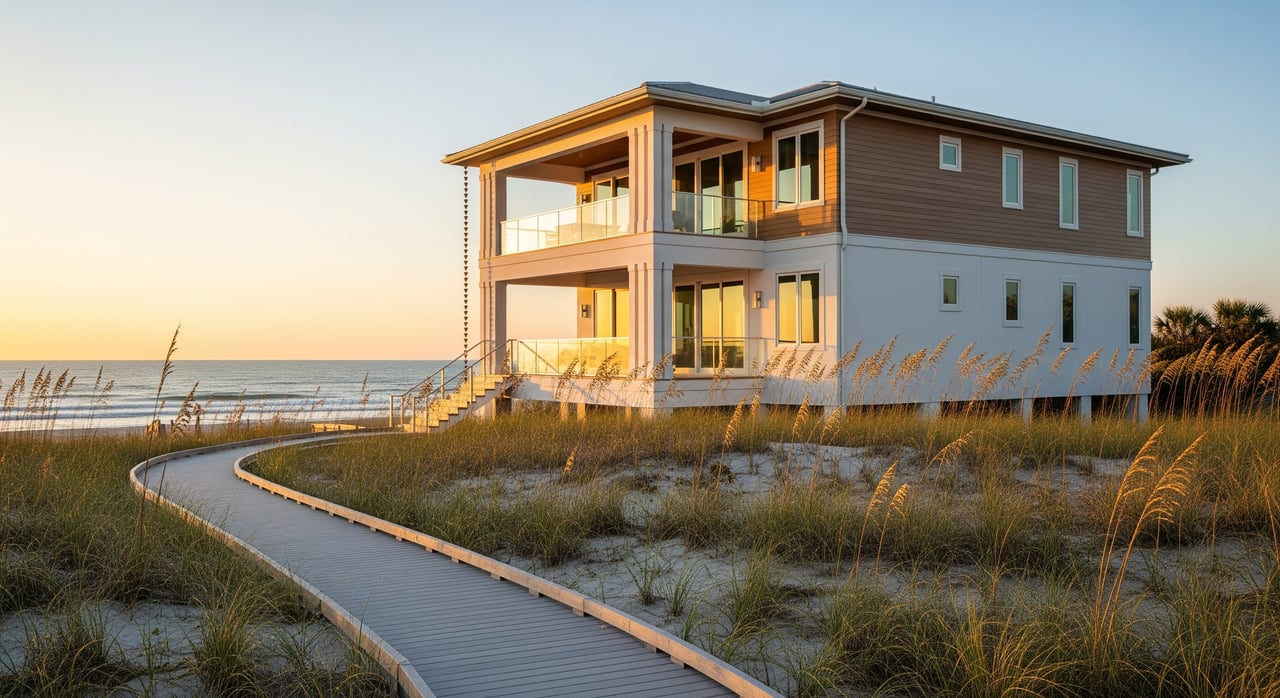
Thinking about building your dream oceanfront home in Melbourne Beach but not sure what the Coastal Construction Control Line means for your plans? You are not alone. The CCCL affects where and how you can build, what permits you need, and even what kind of lights you can install. In this guide, you will learn exactly how the CCCL works, how it fits with local permits, and what to expect from design through approvals so you can plan with confidence. Let’s dive in.
CCCL basics: what it is and why it matters
The Coastal Construction Control Line (CCCL) is a state-mapped line along Florida’s beaches that identifies areas at higher risk from storms and erosion. Any construction seaward of that line triggers special state review to protect dunes, beaches, and the public interest. The program is overseen by the Florida Department of Environmental Protection (FDEP) under Florida Administrative Code Chapter 62B-33.
- Learn more on the FDEP’s CCCL program page.
- Review the rule language in the Florida Administrative Code, Chapter 62B-33.
If your proposed work is seaward of the CCCL, you will likely need a CCCL permit or a formal determination from FDEP before you build. If your plan is fully landward of the line, local codes still apply and you may still need other state or federal approvals depending on the activity.
Find your lot’s status in Melbourne Beach
Before you design, confirm exactly where the CCCL falls on your parcel. Start by reviewing the official CCCL maps and GIS layers. For parcel-level certainty, hire a Florida-licensed surveyor to locate the CCCL relative to your property lines and existing structures.
If the maps seem unclear, FDEP can provide guidance or a formal determination. For flood risk and foundation planning, also check your FEMA flood zone and base flood elevation using the FEMA Flood Map Service Center.
Who approves what: state, local, and federal roles
State role: FDEP and the CCCL
FDEP administers the CCCL program statewide. Construction, substantial improvements, dune alteration, and shoreline protection features seaward of the CCCL are subject to review and permitting. FDEP may issue permits, conditional approvals, exemptions, or a no-jurisdiction letter depending on your design and location. See the FDEP CCCL program overview for how the process works.
Local role: Town of Melbourne Beach and Brevard County
The Town of Melbourne Beach issues building permits, enforces zoning, setbacks, and any local sea-turtle lighting requirements. Local staff typically will not issue permits for work seaward of the CCCL without the required state authorization. Visit the Town of Melbourne Beach site and the Town’s Code of Ordinances for local standards. Depending on location and scope, Brevard County may also have development or permitting involvement; start with Brevard County Planning & Development.
Federal role: USACE
If your project includes work seaward of the mean high water line or affects waters of the United States, you may also need a permit from the U.S. Army Corps of Engineers. This is common for seawalls, groins, and dredging. Learn more from the USACE Jacksonville District Regulatory Division.
Wildlife protection and lighting
Melbourne Beach is within sea turtle nesting habitat. Exterior lighting must comply with local ordinances and follow the Florida Fish and Wildlife Conservation Commission lighting guidance. For design details, use FWC’s Sea Turtle Lighting Best Management Practices.
Melbourne Beach design constraints you should expect
CCCL vs. setbacks vs. erosion zones
The CCCL is a state regulatory line that triggers FDEP jurisdiction. It is not a setback line. Local zoning controls oceanfront yard setbacks, height, lot coverage, and similar standards. Always verify parcel-specific setbacks with the Town of Melbourne Beach planning and building departments.
Dunes and native vegetation
Dunes protect people and property. Any alteration to dunes or their vegetation is sensitive and often requires state review. FDEP encourages preservation and may condition approvals on dune restoration and native planting. For broader coastal guidance, see FDEP’s beach and dune management resources.
Sea turtle lighting
Expect strict lighting controls near the beach. Plans usually need low, shielded, and amber-spectrum fixtures that do not cast light onto the beach. Screens, window treatments, and motion controls may also be required. Use the FWC BMP as your design playbook and confirm any local ordinance requirements with the Town.
Flood zones, V-zones, and structural elevation
Most oceanfront parcels in Brevard County are within FEMA V-zones, which triggers elevation and foundation rules. You will likely need a pile-supported foundation, elevated utilities, and flood-resistant design measures. Verify your BFE and flood zone at the FEMA Map Service Center, and ensure your architect and engineer design to the Florida Building Code coastal standards.
Protective structures
New seawalls, revetments, or groins are highly regulated. FDEP review is rigorous and often coordinated with USACE. Soft solutions, such as dune restoration and beach nourishment, are commonly preferred. Expect a longer timeline and significant analysis if you pursue hard protection seaward of the CCCL.
Utilities and site access
Driveways, stormwater, and septic systems must comply with local standards and cannot destabilize dunes or impede natural sand movement. Coordinate your civil design with local and state reviewers early.
The typical permit path in Melbourne Beach
- Pre-application: Meet with FDEP CCCL staff and Town building and planning staff to confirm jurisdiction, setbacks, and lighting requirements.
- Federal screening: If any work could occur below mean high water, discuss with USACE early.
- State authorization: Secure a CCCL permit or no-jurisdiction letter from FDEP if your plan is seaward of the line or affects dunes.
- Local permits: Apply for Town building permits and provide any required state or federal approvals as attachments.
- Inspections and closeout: Follow state and local conditions during construction and through final certificate of occupancy.
Step-by-step feasibility and permitting checklist
- Establish parcel facts
- Confirm parcel boundaries, recorded elevations, and title details.
- Pull FEMA FIRMs and BFE data from the FEMA Map Service Center.
- Determine the CCCL location
- Review the FDEP CCCL maps and GIS layers.
- Hire a licensed surveyor to locate the CCCL on your site plan. Request an FDEP determination if needed.
- Schedule early consultations
- FDEP CCCL program for state jurisdiction and dune guidance.
- Town of Melbourne Beach building and planning for setbacks, zoning, and turtle lighting rules.
- Brevard County Planning & Development if the county has a role.
- USACE Jacksonville Regulatory if work may occur below mean high water or includes hard structures.
- Commission baseline studies
- Coastal engineering review of erosion trends and dune stability.
- Boundary and topographic survey showing the dune crest, mean high water, CCCL, and improvements.
- Geotechnical investigation for pile and foundation design; wind and flood design input from your engineer.
- Prepare permit packages
- For any work seaward of the CCCL or affecting dunes, prepare an FDEP CCCL application with plans, calculations, and mitigation as needed.
- If proposing a seawall or similar structure, plan for concurrent FDEP and USACE reviews.
- Assemble local building permit applications. Include a sea turtle lighting plan and fixture specifications consistent with FWC BMPs and local code.
- Coordinate and revise
- Expect requests for information and conditions. Update your plans and respond promptly to keep the review on track.
- Construction and inspections
- Follow all permit conditions. Protect dunes, maintain erosion controls, and document required vegetation planting.
- Post-construction compliance
- Maintain turtle-friendly lighting settings and dune vegetation. Track any expiration or renewal dates for ongoing protection measures.
Local details to confirm in Melbourne Beach
- Oceanfront setbacks, maximum heights, and any overlay rules in the Town Code.
- Lighting fixture types, color temperature, shielding, and screening requirements enforced by the Town during nesting season.
- Any local beach management or renourishment plans that could influence long-term shoreline position.
- Whether any Brevard County coastal resource rules apply in addition to Town standards.
Risk and cost factors to budget
- Greater permit complexity and uncertainty for any elements seaward of the CCCL.
- Higher hard costs for pile foundations, elevated utilities, impact-rated openings, and wind/flood design.
- Possible limits or denial for seawalls or revetments; soft solutions may be required.
- Sea turtle lighting compliance, including fixture upgrades and window treatments.
- Flood insurance and long-term exposure to map changes if your home is in a V-zone.
Authoritative resources and contacts
- FDEP CCCL program and CCCL maps
- FAC Chapter 62B-33
- Town of Melbourne Beach and Town Code
- Brevard County Planning & Development
- USACE Jacksonville Regulatory
- FWC lighting guidance and Sea Turtle Lighting BMPs
- FEMA Flood Map Service Center
- Florida Building Code resources
- FDEP beach and dune management
Building near the ocean in Melbourne Beach is achievable with the right plan. Start by confirming your CCCL position and flood zone, then coordinate early with FDEP and the Town. A clear path through design, permitting, and construction helps you control risk, cost, and timeline.
If you are weighing an oceanfront purchase, a lot sale, or a custom build, connect with Meili Viera for a local strategy session. You will get Space Coast insight, clear next steps, and introductions to trusted coastal professionals to help you move forward with confidence.
FAQs
What is the CCCL and how does it affect Melbourne Beach builds?
- The Coastal Construction Control Line identifies areas at higher risk from storms and erosion. Construction seaward of the line typically requires an FDEP CCCL permit or a determination before local permits are issued.
How do I confirm if my Melbourne Beach lot is seaward of the CCCL?
- Check the FDEP CCCL maps and hire a licensed surveyor to place the line on your site plan; request FDEP guidance if needed.
Do I need an FDEP permit if my home is landward of the CCCL?
- Often no for CCCL permits if the project stays landward and does not affect dunes, but local building permits, floodplain rules, and other state or federal approvals may still apply.
Who issues the permits for oceanfront construction in Melbourne Beach?
- FDEP issues CCCL authorizations, the Town of Melbourne Beach issues local building permits, and the USACE may require permits for work below mean high water or in federal waters.
What are the sea turtle lighting rules for oceanfront homes?
- Expect low, shielded, amber-spectrum fixtures that do not illuminate the beach, along with seasonal compliance. Use the FWC BMPs and confirm Town requirements.
How do flood zones and V-zones change my design?
- V-zones trigger elevated, pile-supported foundations, flood-resistant construction, and higher wind design. Verify your BFE at the FEMA Map Service Center.
Can I build a seawall to protect my Melbourne Beach property?
- New hard protection structures are tightly regulated and require FDEP and likely USACE permits. Soft solutions such as dune restoration or nourishment are often preferred.
How long does an FDEP CCCL review usually take?
- Timelines vary with project scope and complexity. A pre-application meeting with FDEP and early coordination with the Town usually helps shorten the process.