Eyeing a lot or older home in The Woodlands of Lake Washington and wondering what it takes to build new? You are smart to pause before you swing a sledgehammer. Lakeside property can be rewarding, but success depends on getting the permits, utilities, and site conditions right from the start. In this guide, you will learn the must‑check items for land and tear‑down purchases near Lake Washington, with local references to help you verify each step. Let’s dive in.
Confirm jurisdiction first
Before you assume any rules, confirm whether the property sits inside the City of Melbourne or in unincorporated Brevard County. Jurisdiction determines who issues permits, what fees apply, and which standards you must follow.
- Start with the official record. Use the Brevard County Property Appraiser parcel search to verify jurisdiction, pull the parcel record, and review recorded easements.
- If it is inside the City of Melbourne, plan to submit plans through the City of Melbourne EnerGov permit portal. If not, you will work with Brevard County Planning and Development.
Tip: Get all permit guidance in writing. It will help you budget and keep your project on track.
Permits and timelines to expect
Demolition and clearing
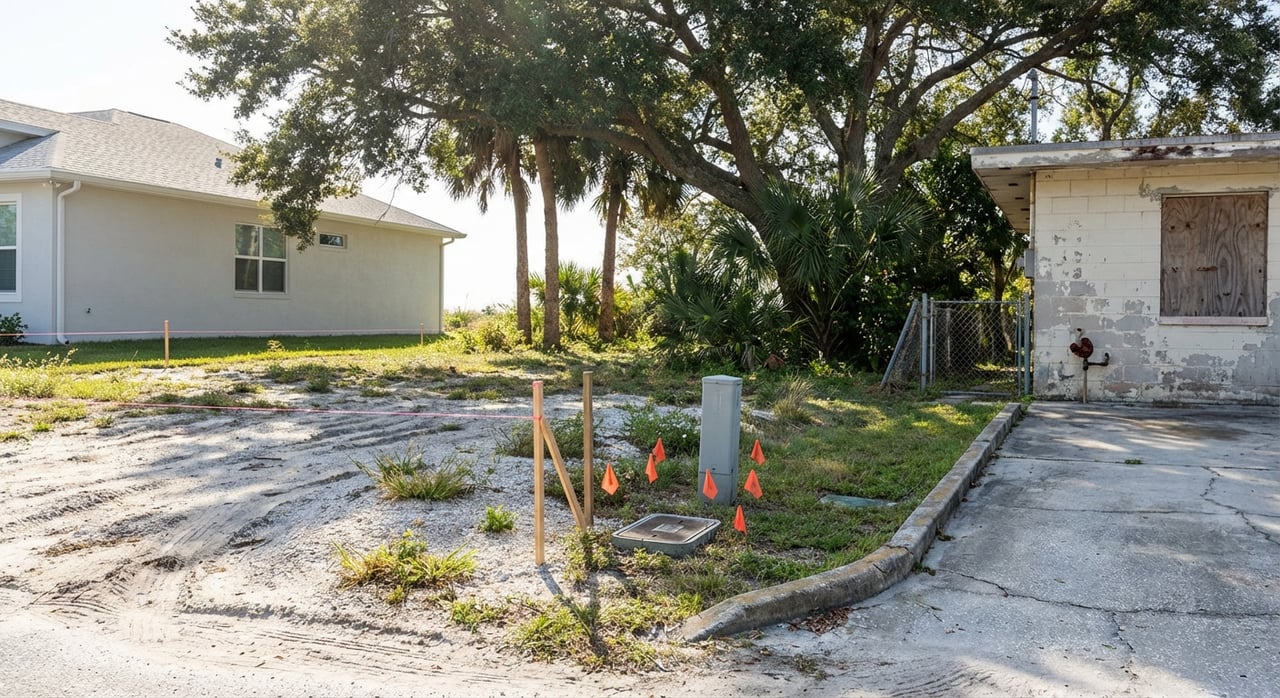
If you are tearing down a structure or clearing a lot inside the City of Melbourne, you will need a demolition permit and inspections. The City asks you to contact the Building Department before any demolition or clearing. Review the City’s guidance here: City guidance on demolition and clearing. Ask about utility disconnect inspections for water, sewer, gas, and electric.
Building and site development
New construction requires a building permit that meets the Florida Building Code and local amendments. Expect site development plans that address grading and stormwater. City and County engineering reviews are common for stormwater retention and drainage. Plan for plan review time when you build your schedule.
Environmental review
Lakefront and near‑lake parcels often involve wetlands or shoreline considerations. If your design affects jurisdictional wetlands or surface waters, you may need environmental permits and mitigation. Many projects in this area purchase credits from the Lake Washington Mitigation Bank. If wetlands may be present, bring in a qualified wetland consultant early so you can confirm jurisdiction and understand potential mitigation costs and timelines.
Flood risk, elevation, and lakeshore realities
FEMA mapping and insurance
Flood risk can change your loan, insurance, and design. Check the FEMA Flood Map Service Center for the exact parcel. If the lot is in a Special Flood Hazard Area, most lenders will require flood insurance. You may also need an Elevation Certificate from a licensed surveyor to properly rate insurance and evaluate the finished-floor elevation you will need.
Soils, muck, and shoreline conditions
Lake Washington sits in the St. Johns River floodplain. Parts of the basin have organic bottom sediment and seasonally variable water levels. That can influence foundation type, shoreline stabilization, and drainage design. A geotechnical investigation will tell you whether standard shallow footings are feasible or whether you need soil improvement or deep foundations. For background on the lake’s physical characteristics, see the EPA and SJRWMD discussion of Lake Washington’s bottom composition.
Utilities: water, sewer, and septic feasibility
Verify water and sewer availability
Do not assume the lot has city water or sewer. The City of Melbourne serves many neighborhoods near Lake Washington, but availability must be confirmed for your specific parcel. Start with the City’s utilities information and request a written capacity and connection-fee letter through the permit portal. If the lot is not on mains, a water or sewer extension can be costly and time-consuming.
In prior years, the area has used special assessments to fund waterline construction. Reviewing county records can reveal past or current assessments on a property. See the Brevard Clerk’s commission minutes referencing a waterline MSBU in The Woodlands area as a local example.
If sewer is not available
If you cannot connect to sewer, you may need a septic system. Septic feasibility depends on soil conditions, setbacks, and environmental rules, which can be stricter near nutrient‑sensitive waters. Confirm septic requirements with the county environmental health office and review the Florida Department of Environmental Protection’s Onsite Sewage guidance.
Survey, soils, and environmental due diligence
Boundary and topographic survey
Order a current ALTA/NSPS boundary survey as part of your feasibility. Ask the surveyor to show setbacks, recorded easements, FEMA flood elevations, and visible improvements. Easements for utilities or drainage can reduce your buildable area and influence your design.
Geotechnical report
Hire a geotechnical engineer to sample on site. In lakeside areas, you often see high water tables or organic material that can affect bearing capacity. Your geotech report will set allowable bearing, slab and footing design, and whether you need soil improvement.
Phase I environmental site assessment
If you are buying vacant land or a tear‑down, especially one with any prior commercial use, order a Phase I Environmental Site Assessment. The report will identify recognized environmental conditions and help you avoid surprises before you close.
Market factors and financing to weigh
Pricing and carry costs
Lakefront lots are scarce and can command a premium, but carrying costs can be higher. Model flood insurance, property tax, shoreline maintenance, and interest during construction in your budget. When you evaluate value, use relevant local comps and market context, such as a public Melbourne market snapshot, to ground your assumptions. Compare a tear‑down plus new build against a renovation scenario if the structure is salvageable.
Construction financing
For a buy‑tear‑down‑build plan, many buyers use construction‑to‑permanent financing. These loans can fund demolition and construction draws, then convert to a standard mortgage at completion. Terms and down payments vary by lender, so speak with lenders early to confirm requirements, reserves, and approved builder lists. If you plan to hold land before building, a land or lot loan may have a different rate and loan‑to‑value ratio than a standard mortgage.
Demolition costs and special hazards
Demolition bids vary with structure size, access, and whether hazardous materials like asbestos or lead are present. If abatement is needed, you will need licensed contractors and proper disposal. Ask for written bids that include permit fees and disposal plans. The City provides reminders and contacts for demolition on its Natural Emergencies FAQ page.
HOA and neighborhood rules in The Woodlands
The Woodlands of Lake Washington has an HOA with recorded covenants, conditions, and restrictions that can affect footprint, exterior finishes, docks, and rental rules. Always obtain the full CCRs and any architectural guidelines before you finalize a design or a contract. A public Woodlands of Lake Washington HOA listing confirms the association’s presence. Request the full, current documents from the seller or property manager as part of your due diligence.
A step‑by‑step due diligence checklist
- Confirm jurisdiction and pull the parcel record, deeds, and easements with the Brevard County Property Appraiser.
- Contact the appropriate permitting office. If inside city limits, set up your project in the City of Melbourne EnerGov portal.
- Review HOA documents for The Woodlands of Lake Washington and note any architectural or use restrictions.
- Check FEMA maps for flood zone, then plan for an Elevation Certificate if needed via the FEMA Map Service Center.
- Order a boundary and topographic survey and a geotechnical report.
- Screen for wetlands. If indicators are present, bring in a wetland scientist and plan for potential mitigation using the Lake Washington Mitigation Bank.
- Confirm water and sewer availability in writing through City of Melbourne utilities. If not available, assess the cost and time for extensions or septic.
- Pull any county records for special assessments, such as the waterline MSBU noted in Brevard commission minutes.
- Order a Phase I environmental site assessment if the site has any risk factors.
- Build your budget: demolition, design, permits, mitigation, utilities, foundation, insurance, and a construction contingency. Align financing and timelines with your lender and builder.
Buying land or a tear‑down near Lake Washington can be a great path to a custom home in a peaceful, well‑located area. With the right homework, you will move from idea to site plan with fewer surprises and stronger numbers. If you want a local advisor to help you navigate zoning, comps, builders, and timing, reach out to MVP Sales Group (Meili Viera) for a personalized plan.
FAQs
What permits are required to demolish a home in the City of Melbourne?
- You need a demolition permit and inspections, including utility disconnects. Review the City’s instructions and contacts on the Natural Emergencies FAQ page and confirm requirements in writing with the Building Department.
How do I check if a Woodlands lot is in a flood zone?
- Look up the address on the FEMA Map Service Center. If it lies in a Special Flood Hazard Area, budget for flood insurance and plan to order an Elevation Certificate from a surveyor.
Can I build on a lot with wetlands near Lake Washington?
- It depends on site jurisdiction and your design. Many projects must avoid or minimize impacts, then buy credits from the Lake Washington Mitigation Bank to offset permitted impacts. Engage a wetland consultant early.
How do I confirm water and sewer service for a Woodlands parcel?
- Contact the City and request a written capacity and fee letter through City of Melbourne utilities. If service is not at the lot line, assess extension costs or septic feasibility before you close.
Does The Woodlands of Lake Washington have HOA rules that affect rebuilding?
- Yes. The neighborhood has an HOA. Obtain the full CCRs and architectural guidelines from the seller or manager. You can confirm the HOA’s presence via this public listing and then request the current documents for review.