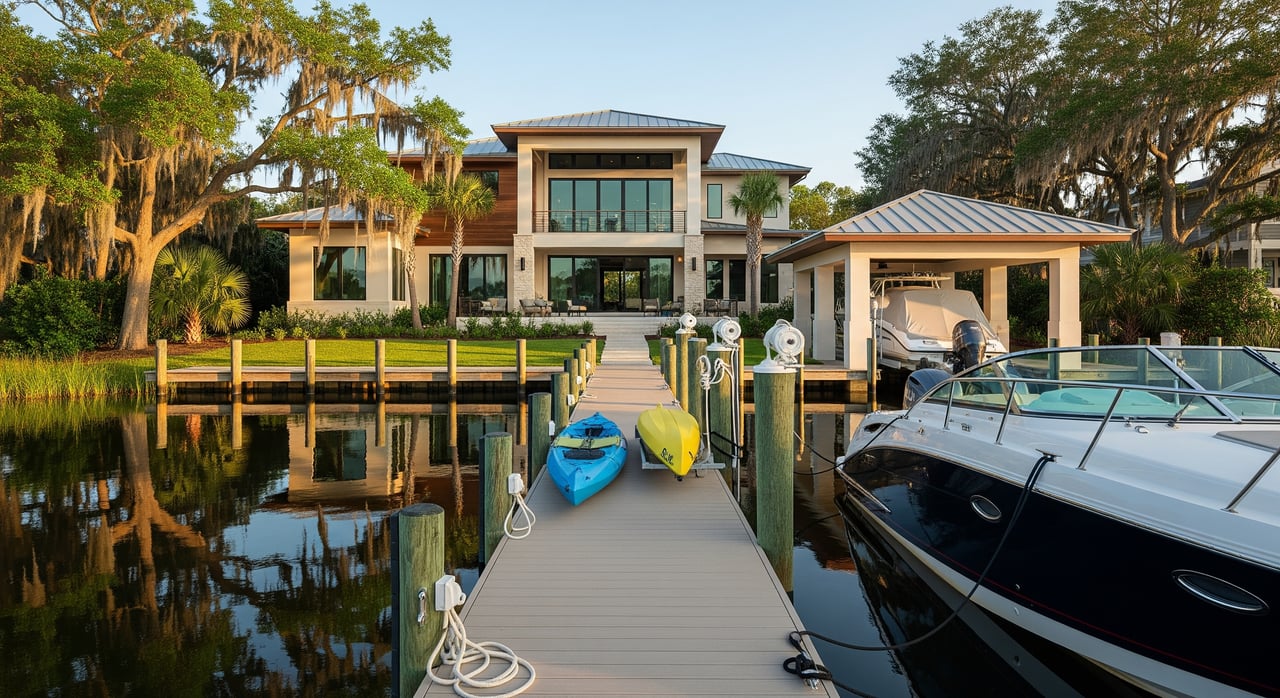
Dreaming of walking out your back door, stepping onto your dock, and cruising Lake Washington before dinner? If you are exploring The Woodlands of Lake Washington, you are in the right place. Buying a lakefront home here is about more than a pretty view. You need the right canal, access type, and approvals so your boat life works on day one. In this guide, you will learn how to read the waterways, verify HOA and permit rules, and use a simple buyer’s map method to target the best-fit properties. Let’s dive in.
Lake Washington basics in The Woodlands
Lake Washington in Brevard County is a freshwater inland lake with residential canals and private docks for small to moderate recreational boats. Not every canal is the same. Some areas have connections to larger waterbodies or canals, while others are isolated or better for kayaks and small craft. Always confirm the specific canal’s connectivity and navigability for your needs.
The Woodlands of Lake Washington is a planned neighborhood oriented around canals and lake edges. Lots often have linear waterfrontage with seawalls, private docks, or riparian access. Corner lots, bends, and cul-de-sac tips can change how you position a dock and how easily you can maneuver a boat. Local verification is essential, because conditions like depth, HOA rules, and maintenance responsibilities can vary property by property.
Boating access options explained
Private docks and lifts
If you want your boat at home, look for properties with an existing private dock or a lot suited for a future dock. Private docks can be fixed or floating. Floating docks adapt better to changing water levels. Boat lifts and hoists add convenience for maintenance and storage. These features often require HOA approval and county permits, and lifts may trigger electrical inspections. Plan for timelines and possible design standards.
Community docks and slips
Some associations offer shared docks or slips. Access might be assigned, rented, or limited to certain lots. Ask about waitlists, guest use, fees, and insurance requirements. Community options can be a great solution if your lot is not ideal for a private dock.
Public ramps and trailering
If you trailer a larger boat or prefer flexibility, proximity to a public ramp can be a key factor in your home search. Even if you have a private dock, living near a ramp can help when water levels are low, you need service, or you plan to launch different types of craft.
Dry storage at home
Storing a boat on a trailer in a garage or side yard avoids dock permitting, but limits on-water convenience. Confirm HOA rules on outdoor storage. This setup can be a smart interim plan while you pursue approvals for a dock or lift.
Canal characteristics that matter
Width and depth
Canal width and depth determine what boat length and beam can safely use a property. Narrow canals limit turning and can make it tough to pass adjacent docks or boats. Depth varies with seasons and storms. Have a marine contractor estimate depth at low water and confirm whether your draft will clear.
Turning basins and bends
Homes on bends or dead ends may face tight turning radiuses. Look for straight runs and open zones where you can spin a boat safely. If a canal lacks a turning basin, larger boats may not be practical.
Vegetation and hazards
Aquatic vegetation, shallow shoals, and debris can change by season. These conditions affect draft and prop clearance. Ask neighbors about typical growth cycles and observe vegetation coverage in aerial images and in person.
Seawalls and bulkheads
Seawall condition is a big factor for dock feasibility and safety. Watch for cracking, bowing, undermining, or corrosion. Older seawalls may need repair or replacement before you add a lift. Confirm who maintains seawalls and whether repairs require permits.
Water level variation
Lake Washington is freshwater, yet water levels can shift after storms or during dryer periods. If your boat needs consistent depth, plan for these variations when selecting a canal and dock design.
HOA and permits: what to verify
HOA covenants and approvals
Before you fall in love with a view, read the HOA’s rules. Ask whether private docks and lifts are allowed, and whether there are size limits, setbacks, materials, or color requirements. Many HOAs require architectural review and written approval for docks, lifts, and boathouses. Clarify usage rules for community docks, any fees, and liability or insurance requirements. Review recent meeting minutes to spot planned projects or upcoming assessments.
County and state permitting
Expect to engage local and state agencies for shoreline work. Brevard County Building and Permitting typically reviews docks, lifts, seawalls, structural elements, setbacks, and electrical hookups. The Florida Department of Environmental Protection may oversee waterway or wetland impacts. The U.S. Army Corps of Engineers can be involved if work affects navigable waters. Water management districts may require permits for surface water or stormwater issues. Coordinate utility providers for safe electrical installations.
Common triggers and constraints
Dock or lift length, distance from property lines, piling counts, and overall design can affect approvals. Seawall repairs often follow a different process than full replacements. Dredging is often restricted and may require approvals or be disallowed. Environmental protections can shape what you can build or where.
Canal, seawall, and maintenance responsibility
In some communities, owners maintain their own seawalls and adjacent canal frontage. In others, the HOA or a public entity handles maintenance and dredging. Confirm responsibility, frequency of work, and how assessments are scheduled so you understand long-term costs.
How to map and screen properties
Use GIS and aerials
Start with county GIS and property appraiser maps to outline parcel lines, measure waterfront frontage, and estimate canal width. Add aerial imagery to review existing docks, turning areas, vegetation, and likely depth cues. Mark potential public ramp routes from each property so you can compare driving and trailering times.
Review permit records and HOA minutes
Check county permit history for any existing dock or lift on the property. Look for inspection outcomes or open issues. Request HOA architectural guidelines and recent minutes to understand what was recently approved or denied on comparable lots.
Bring a marine contractor onsite
During the inspection period, hire a licensed marine contractor or dock builder. Ask for a seawall assessment, piling review, and depth measurements at the proposed dock location. A short site visit can save you from expensive surprises.
Write smart contingencies
When you write an offer, include contingencies for dock, lift, and boating use verification. Allow time to confirm necessary approvals with the county, state agencies if applicable, utilities, and the HOA. This protects your deposit and ensures you can build what you need.
Buyer’s boating-access checklist
Use this list at showings and during due diligence:
- Confirm documented riparian or deeded dock rights for the lot.
- Verify whether the HOA allows private docks and lifts; request written policy and design standards.
- Pull county permits for any existing dock or lift; request copies of permits and inspections.
- Inspect seawall condition and last repair or replacement date; get estimates for needed work.
- Measure waterfront frontage and approximate canal width; have depth measured at low water by a marine contractor.
- Ask about dredging rules and recent dredging history for the canal.
- Clarify who maintains canals and seawalls, and whether assessments are scheduled or pending.
- Confirm nearest public boat ramp location and expected trailer drive time.
- Verify FEMA flood zone, elevation data, and insurance implications for structures near the waterline.
- Check utility availability for lift power and any insurance requirements for in-water electrical equipment.
- Request recent HOA meeting minutes for planned bulkhead or dock projects and any evolving restrictions.
Risks and common deal breakers
Before you commit, be aware of these frequent issues:
- No recorded riparian rights or HOA prohibitions on docks.
- Narrow or obstructed canals that fit only kayaks or shallow skiffs.
- Failing seawalls that require major repairs before lift installation.
- Dredging prohibitions that prevent adequate depth for your draft.
- Unpermitted docks, encroachments, or open code cases that cloud title or limit use.
- Pending HOA assessments or litigation tied to canal or seawall maintenance.
Your next steps in The Woodlands
If lake life is your goal, start by matching your boat to the canal, then confirm HOA and permitting pathways for your ideal setup. Build a shortlist of The Woodlands properties that meet your width, depth, and maintenance criteria. During the inspection period, bring in a marine contractor and pull county permit history so you know exactly what you can build and when.
You do not have to navigate this alone. For a personalized plan, local introductions, and a step-by-step path from offer to approved dock, reach out to Meili Viera. We are ready to help you secure the right home for your boat and your lifestyle.
FAQs
What should I check first when buying a boating home in The Woodlands?
- Start with canal width and depth for your boat, then confirm HOA allowance for docks or lifts and the county permit history for any existing structures.
How do I know if a canal near Lake Washington connects to larger waterways?
- Ask the HOA and neighbors about connectivity, review aerial maps for canal paths, and verify with county records to confirm whether a canal is isolated or connected.
What approvals are needed to install a new boat lift at a Lake Washington home?
- Expect HOA architectural approval plus county permits for structural and electrical work; state or federal agencies may review projects that affect certain waters.
Who maintains seawalls and canals in The Woodlands of Lake Washington?
- It varies by community documents; confirm whether owners, the HOA, or a public entity handles maintenance and how assessments are scheduled.
Are floating docks better than fixed docks on Lake Washington?
- Floating docks adapt to water-level changes, while fixed docks can be more limiting; your choice should align with HOA rules, permit constraints, and your boat’s needs.
What offer contingencies protect me when buying a lakefront home with a dock?
- Include contingencies for dock, lift, and boating use verification, plus time to confirm approvals with the HOA, county, and any relevant agencies.